European Academy Berlin – Memory culture

Two projects with the European Academy Berlin — both focused on enabling partners to populate virtual learning spaces for remembrance work: once remote and content-driven, once as a guided VR tour on site.

Both projects connect historical archives, youth participation and immersive presentation. They show how memory culture becomes digitally experienceable — and how Splexit is involved differently as platform and service partner: with Onboarding Memories mainly on the content layer of virtual learning spaces, with Hybrid Pathways // Shared Histories on guided VR presentations with didactically prepared sites.

Project partners

Onboarding Memories — digital memory spaces in Mozilla Hubs

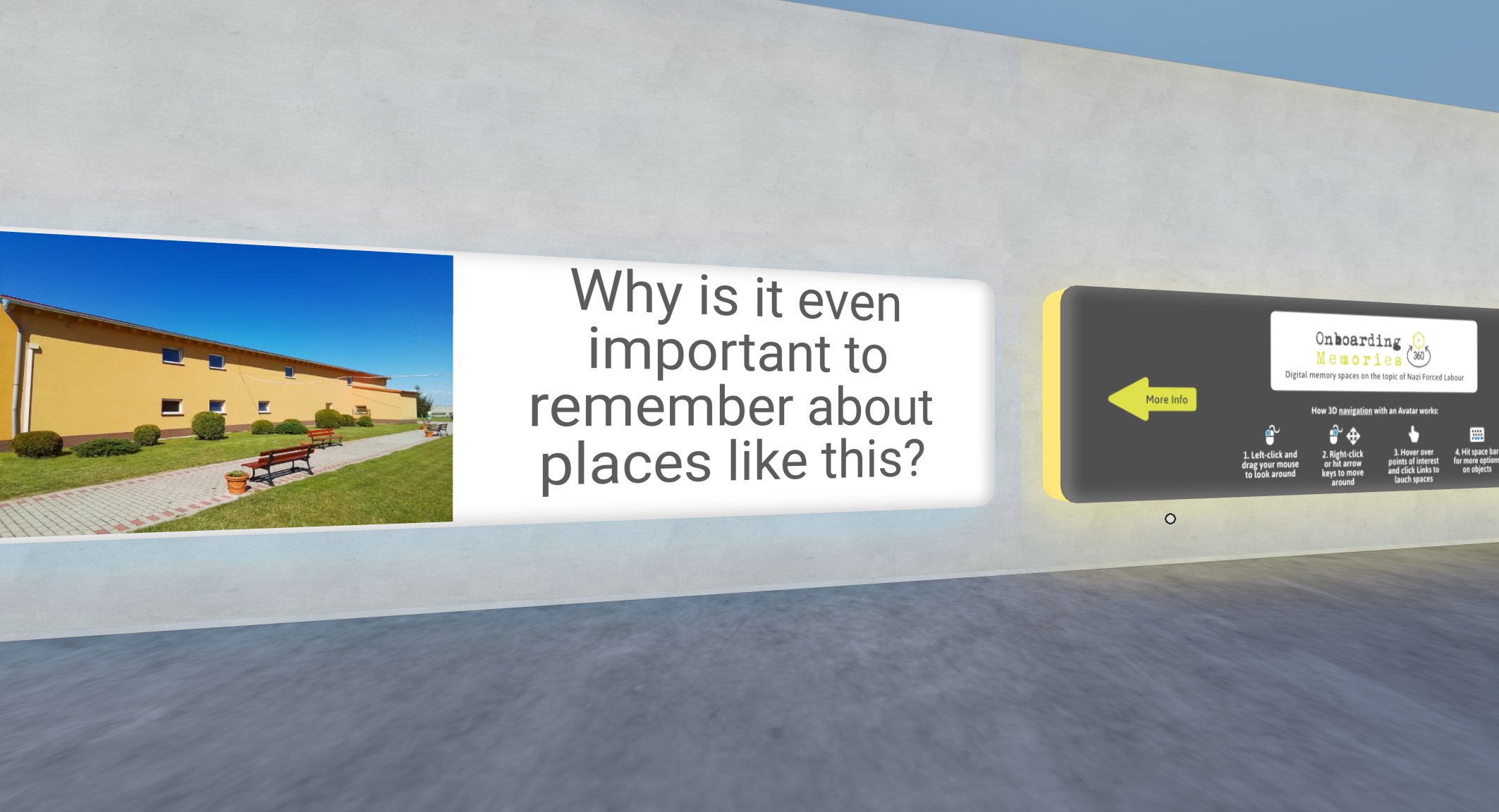
Onboarding Memories

Digital memory spaces on Nazi forced labour — accessible remotely, developed from multiple perspectives and freely available.

Archive material — eyewitness conversations, photographs, documents — is woven into connected digital memory spaces. 360-degree photography forms the rooms in which stories and people are anchored. At its core, the project was about designing and populating remote learning spaces — based on Mozilla Hubs, with a focus on content and its spatial embedding. For Splexit, this was primarily a content-driven custom experience project.

Project lead: European Academy Berlin · Cooperation incl. Kreisau Foundation, Centre Européen Robert Schuman, Istituto Comprensivo Treviso · Funded under the Education Agenda on Nazi Injustice (2021–2022)

onboardingmemories.com · EAB project page

Challenge

Remembrance work faces the same tension: eyewitness conversations are becoming rarer, young audiences need new access — sensitive, multi-perspective and without mixing fiction with fact.

At the same time, complex historical connections must be translated into formats that work on site, remotely and in groups — without technology dominating the presentation.

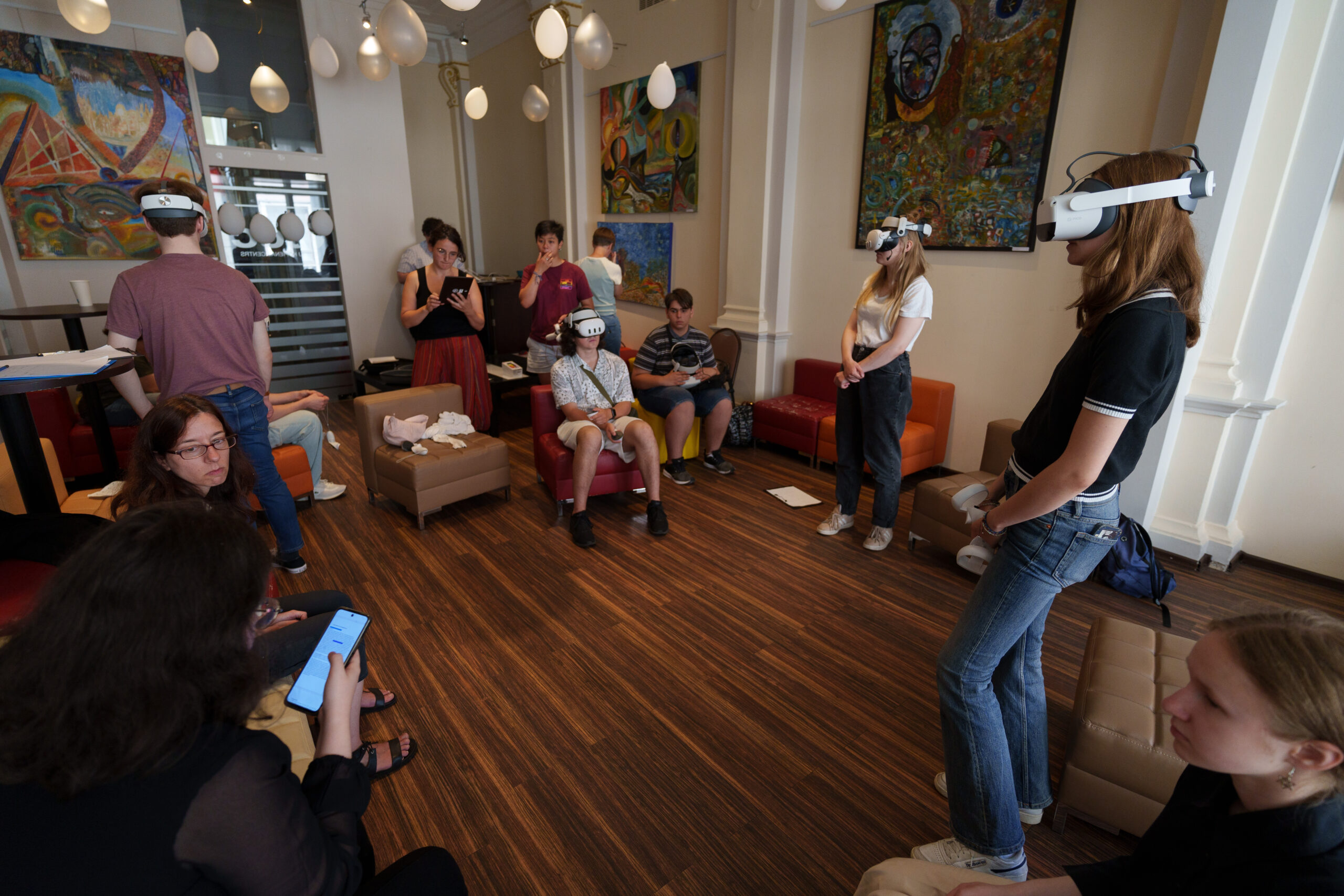
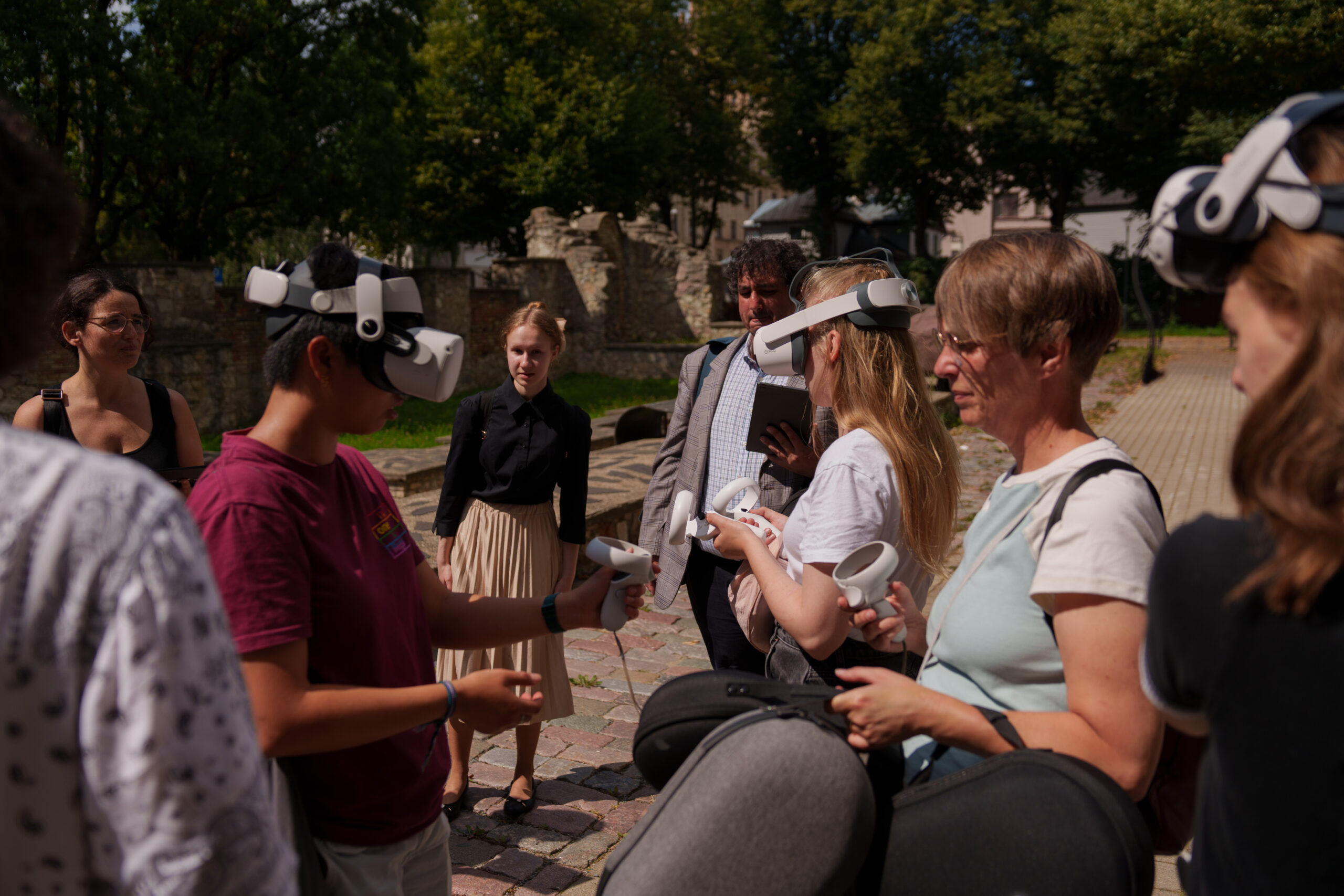
Participants with VR headsets in a workshop room

Photos: © Nikolai Krasnopevcev

Hybrid Pathways // Shared Histories

Guided VR tours on Jewish family biographies in Berlin and Riga — sites prepared didactically, made accessible with 360° imagery.

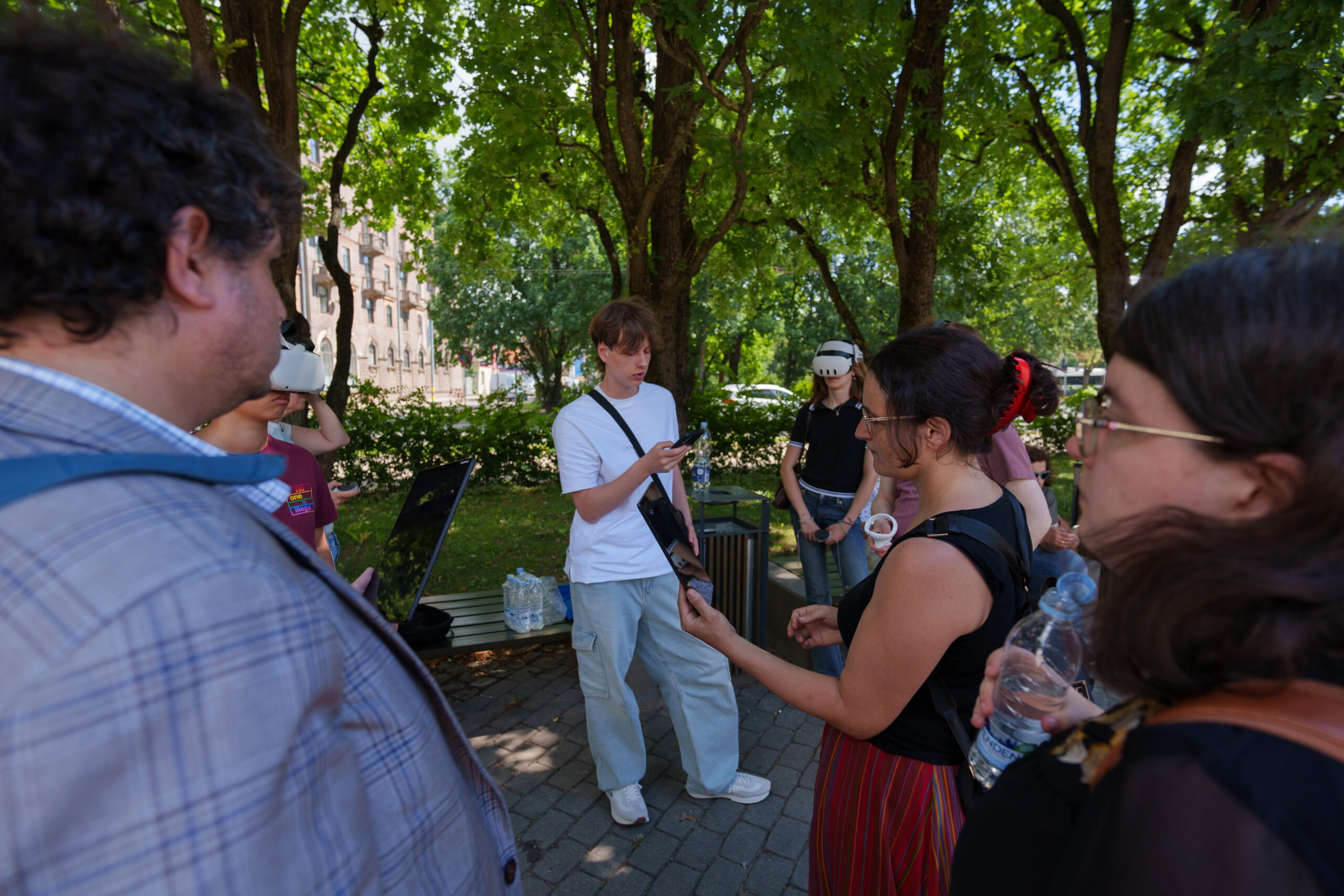
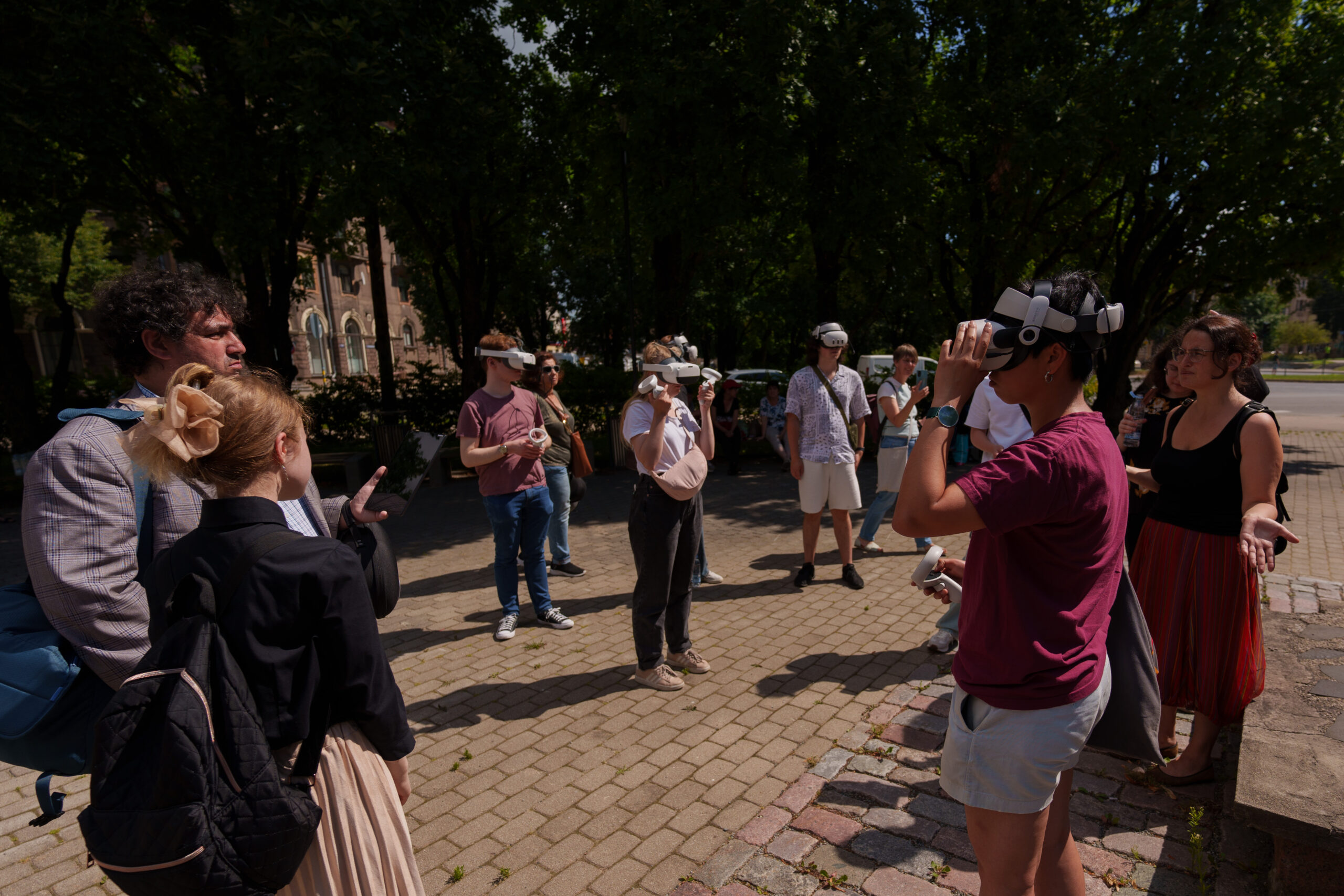
Young people from Germany and Latvia researched the life paths of the Bütow (Berlin) and Levin (Riga) families with historians and media experts. This became city tours with AR/VR elements: historical sites on location, supplemented by distant scenes across Europe — with documents, background information and multimedia content.

Through Splexit, a didactically prepared module is available that portrays both families — for guided presentations, especially by professional tour guides. Here the Splexit connection was on guided VR presentation synchronised in the headset, not content production alone.

Realised by EAB with Jewish Museum Latvia, Riga Jewish Community, Goral association and Blickwinkel Tour as technical partner · Funded by EVZ Foundation and Federal Foreign Office in the JUGEND erinnert programme (2023–2024)

EAB project page

Two approaches with Splexit

Onboarding Memories — virtual learning spaces

  • Remote memory spaces: connect content spatially instead of storing it in isolation
  • 360° stations, archive material and audio embedded in learning spaces
  • Focus: content design and populating immersive learning environments

Hybrid Pathways — guided tours

  • Didactically prepared sites as 360° stations in Splexit
  • Guided VR sessions: presenter leads, group experiences synchronously in the headset
  • Module on two family biographies — usable for tour guides and educational contexts

Outcome

  • Onboarding Memories: freely accessible network of digital memory spaces on Nazi forced labour
  • Hybrid Pathways: AR/VR city tours in German, Latvian and English — usable via the Splexit app
  • A model for memory culture: from remotely populated learning spaces to guided VR tours on site — on the same platform infrastructure

Planning a similar project?

We support educational partners, museums and institutions with custom experiences in remembrance work — from virtual learning spaces to guided presentations on Splexit infrastructure.