


Create 3D experiences by conversation.
Describe your lesson. I'll make it spatial.
— Splexi

Describe your lesson. I'll make it spatial.
— Splexi

Spatial content, authored by conversation.
Spatial content is the one format that still requires a 3D specialist to create.
Splexit, an open-source presentation ecosystem, makes it possible to deliver spatial presentations on XR-Headsets — the infrastructure exists.
What's missing is a creation layer that speaks the teacher's language.

Meet Splexi — an embodied AI agent that authors spatial content through conversation. Splexi works on two layers at once.
Background · Agent
An agentic system that retrieves 3D assets, generates content, structures spatial scenes, and maps them to learning objectives - based on real lesson plans.
Foreground · Avatar
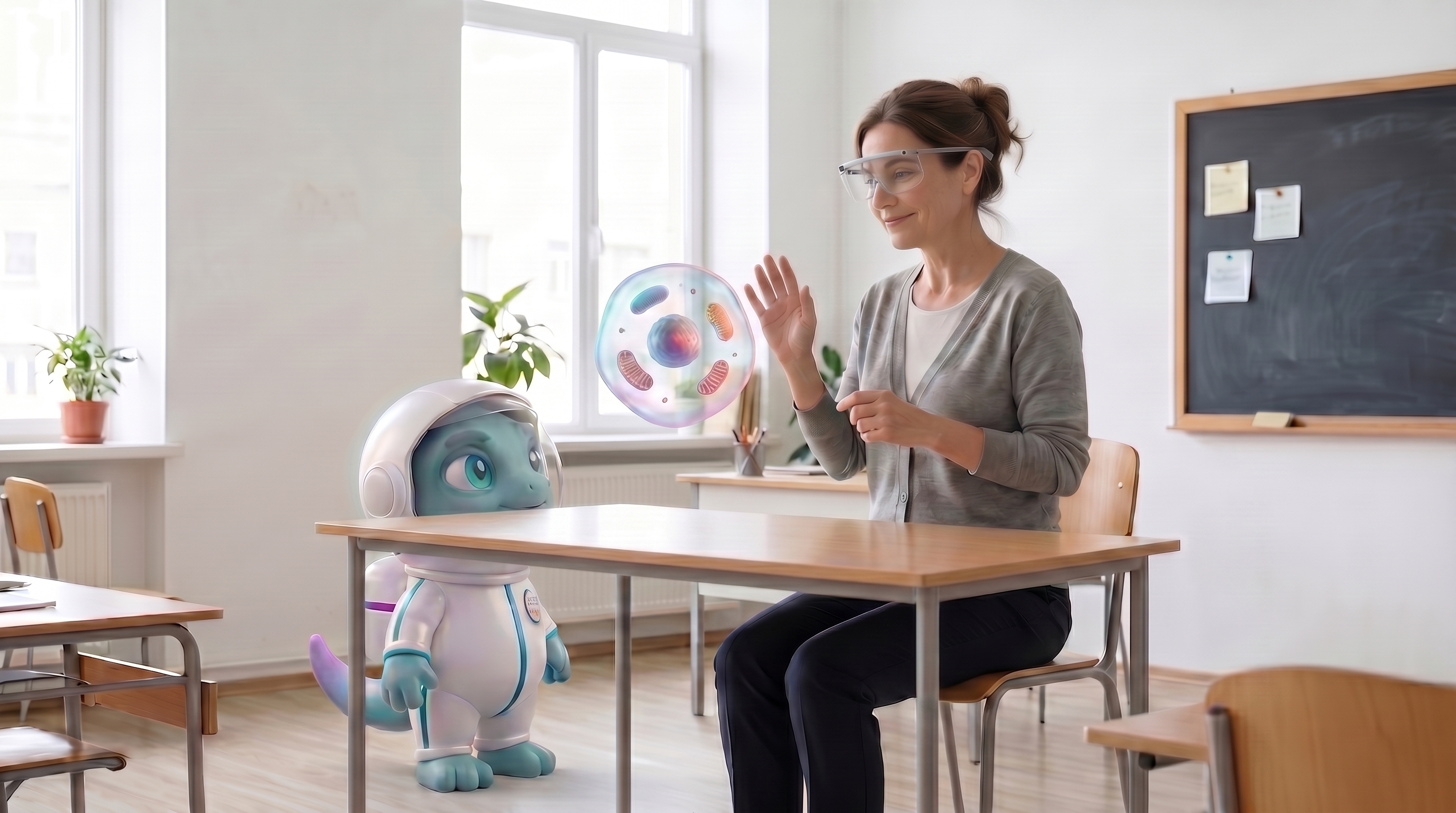
A lovely alien embodied character standing in the workspace, visible through the XR-Headset. The entire authoring process runs through conversation. The teacher talks to Splexi like a colleague. Splexi confirms, asks back, shows options in the space, and makes the invisible agent layer tangible.
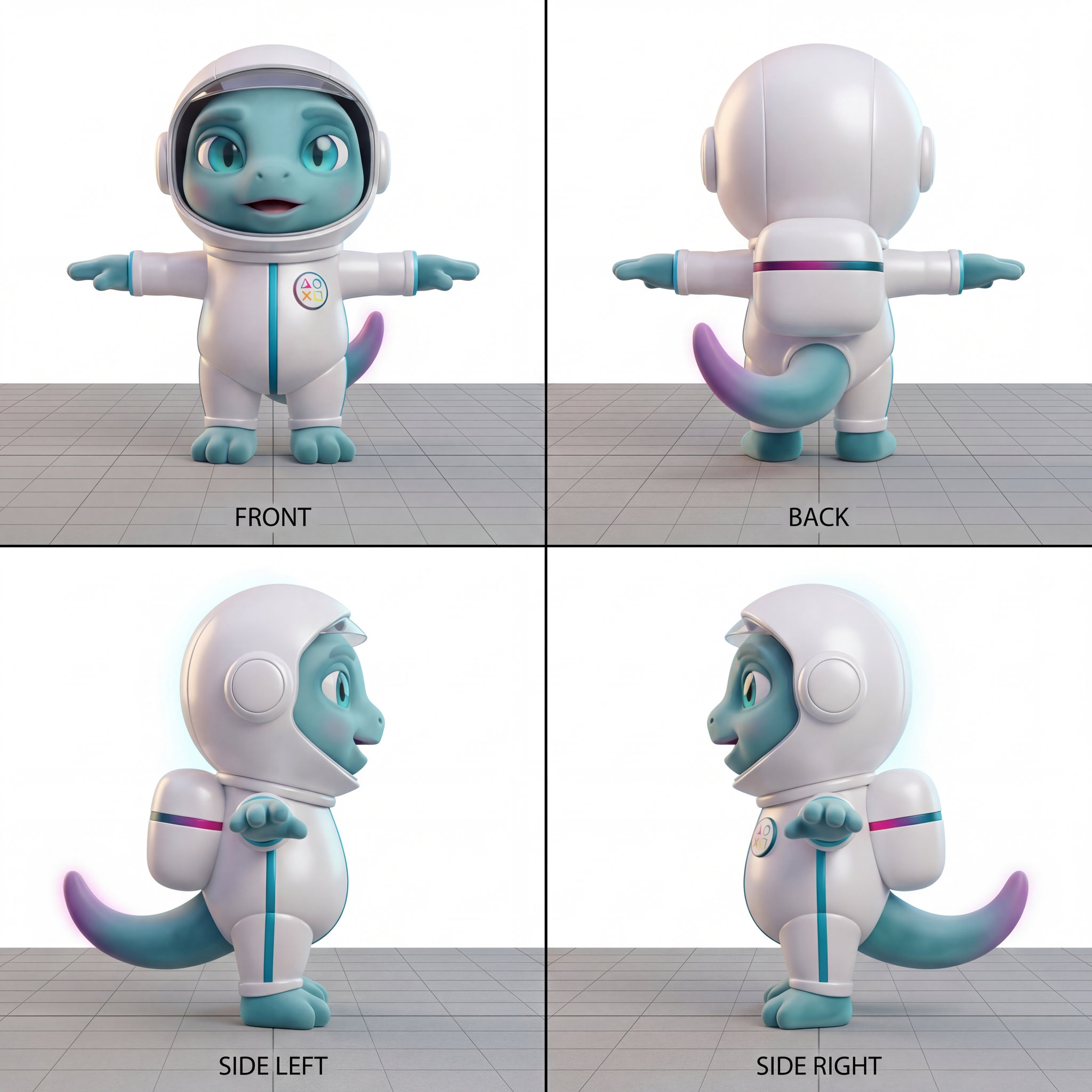
Authoring spatial content should be spatial. Splexi doesn't live on a screen. He stands in the scene — right next to the content he builds.
The teacher describes. Splexi authors. The teacher sees what the students will see, while it's being made.
Route requests through your own LLMs. Splexi handles the conversation and the tool chain, you pick the model & your agent.
Integrate text-to-3D pipelines so “generate and place” outputs classroom-ready glTF content.
A composable ecosystem. Swap components, add tools, extend the platform. Integrations are the point.

Creative systems architect · platforms for educators · ai automations
What you saw in this deck is a concept — vision and design direction we're exploring, not a shipping product or fixed roadmap.
